
40 Nine things you didn’t know…
In which I recap the bare bones of the LCSNA talk, and some of this blog's greatest hits.

I made a promise to myself in January to blog every week. I missed a couple, but we’ve made it to 40 posts. I’ll take that!
Now normally we do topic deep-dives on Alice & The Eggman, but I’m getting to the point now where — as my wife keeps telling me — I need to do more recaps.
Since the memory of my LCSNA webinar is fading now, I thought I could quickly run down the 9 themes I covered (after the opening video), and link to individual posts in case you want to go deeer. Each of the nine themes represents a Carroll / Beatles connection that’s not part of the typical story.
Just in case you’ve not caught the webinar yet, you can rewatch it here:
So here we go.
01: IT’S IN THE NAME
The Beatles, previously ‘Silver Beetles’, became Beatles, “with an A”, reflecting the Merseybeat era, while also creating a beautiful, Carrollian, neologism:
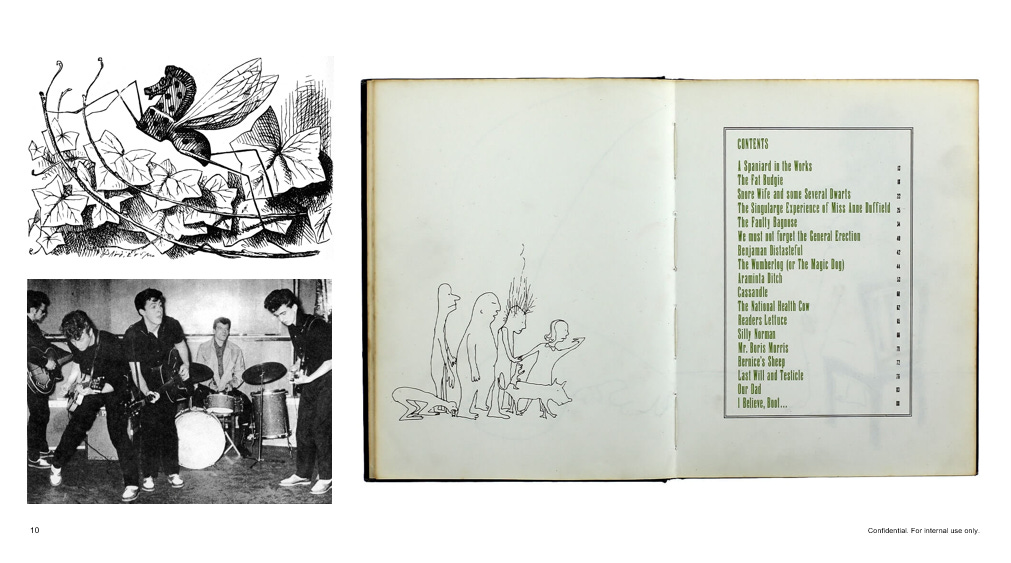
John loved Carroll’s mock epic ironic approach, and I like to think his spoof origin myth for the band, is in the same noble lineage: “Many people ask what are Beatles? Why Beatles? Ugh, Beatles, how did the name arrive? So we will tell you. It came in a vision – a man appeared on a flaming pie and said unto them ‘From this day on you are Beatles with an ‘A’. Thank you, mister man, they said, thanking him.” - John Lennon, Mersey Beat (July 6-20, 1961).
Read more:
»»» 29 Beatles, with an 'A'
02: IT’S IN THE LOGO TOO
Yes, we know the Beatles picked an apple for their record label. But the influence of Carroll on Magritte, Magritte on McCartney and so on, is less well understood.
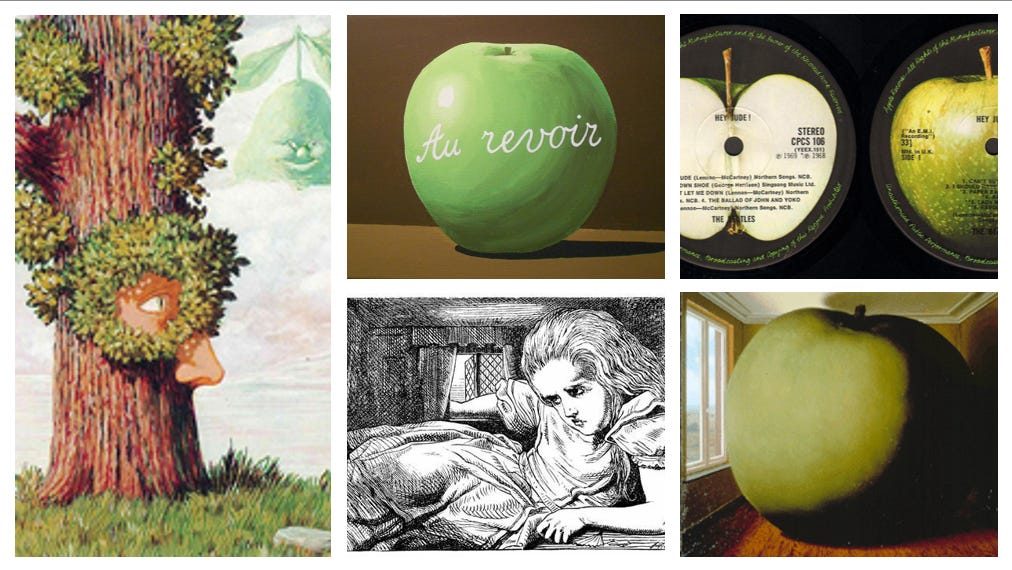
The key points:
Surrealists like Aragon laud Carroll as a ‘herald’
Magritte paints Alice in Wonderland, apples, looking-glasses
Lennon tells Yoko he feels like Magritte, in the suburbs
McCartney becomes a major Magritte fan and collector
Inspires choice of Apple, and in turn Steve Jobs’ Apple.
Read more:
»»» 02 Apples to Apples
03: IT’S IN MORE SONGS THAN YOU THINK
Everyone knows ‘Lucy’ & ‘Walrus’ are the big Carroll tracks, the ones they explicitly said were attempts to do Alice.
But there’s more. Before, during and after the late 60s era.
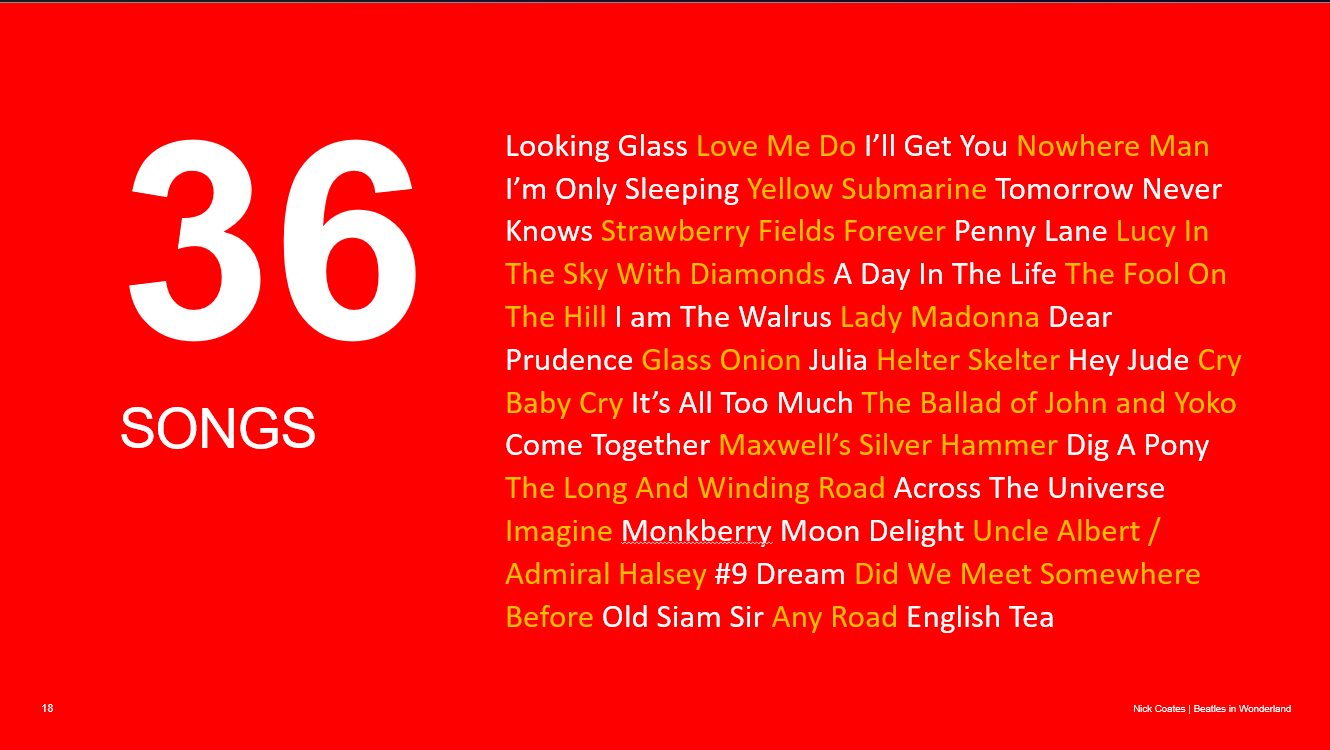
I’ve identified links in up to 36 tracks, Beatles and beyond. Some highlights include…
Looking-glass: the unrecorded 1958 instrumental
Love me do: “Oh, Kitty, do help to settle it!”
Glass Onion: ‘looking through a glass onion’
The Long & Winding Road: quotes the ‘pool of tears’ chapter
Helter Skelter: Lobster Quadrille-inspired ‘do you don’t you’ verses
Cry Baby Cry’s nursery rhyme and the crying (perverted lullaby) theme
Maxwell’s Silver Hammer: decapitation theme / Queen of Hearts
Julia: evocative and metaphorical “seashell eyes”
#9 dream: “through the mirror go round round”
The list goes on…
Read more:
»»» 03 Nothing is Real
»»» 09 Pop goes the Pepper
»»» 10 Kaleidoscope Eyes
»»» 11 The Walrus & The Songwriter
»»» 20 A Doll's House
»»» 21 Early Days
»»» 22 English Tea
»»» 35 Monkberry Moon & Butter Pies
04: IT’S ARTWORK TOO
Beyond the placement of Lewis Carroll as one of the cutout figures on Sgt Pepper, I see a lot of Alicey visual moves and methods at play.
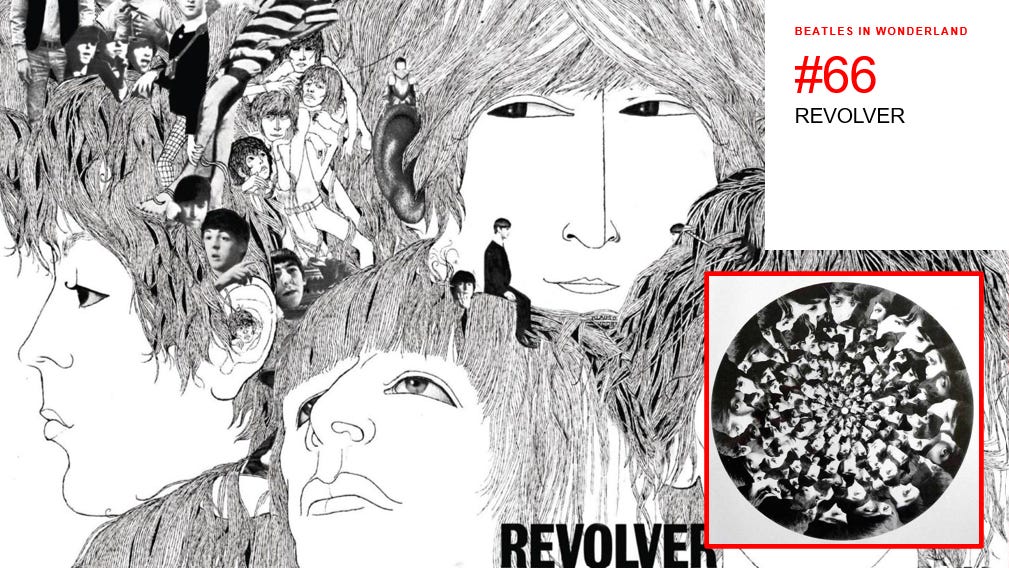
Examples include:
Rubber Soul: the accidental warped group shot
Revolver: playing with scale and where the eyes go
Sgt Pepper: Dodgson among the pantheon of heroes
Magical Mystery Tour: a Walrus in full view
White Album: Snark maritime map and also-ran ‘Alice party on lawn’ idea
Read more:
»»» 18 The Cover Art pt 1: The Albums
»»» 19 The Cover Art pt 2: The Solo Work
»»» 27 Who Stole the Heads?
05: IT’S PHYSICAL - PAUL’S STATUES
Paul moves into Cavendish Avenue and his brother gives him Alice statues, which seem to have a life of their own and create a Wonderland in the backyard.
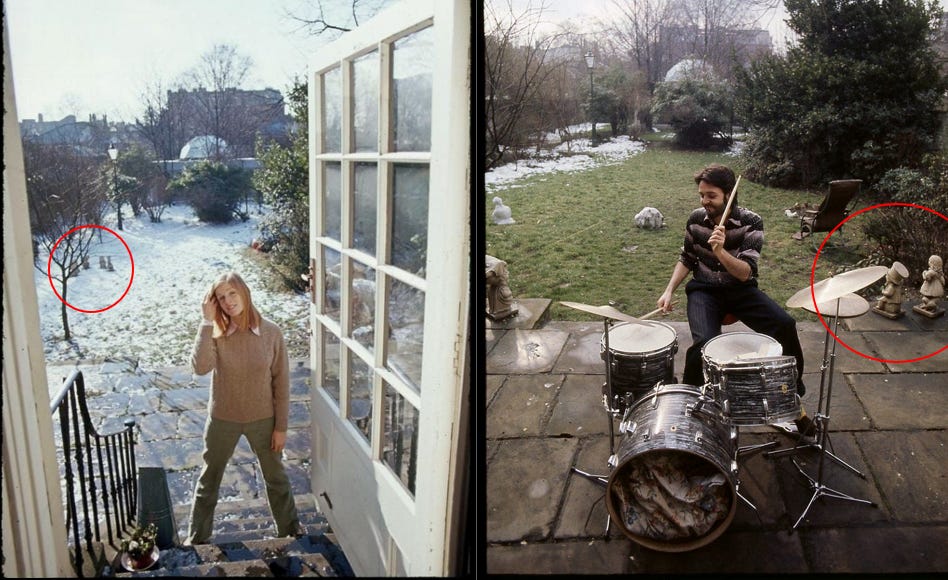
Some key moments in the garden:
Mentioned by Peter Blake and The Fool as part of visiting Paul in the mid ‘60s
Loud and proud in Barry Lategan’s 1968 photos at home for The Observer
On the cover of US single release of ‘The Ballad of John & Yoko’ (1969)
Maybe inspo for James McCartney’s ‘Alice’ with its “stone white queen of hearts”
Paul drumming on the rear patio accompanied by friends
Read more:
»»» 01 Paul's Garden
06: FROM WONDERLAND TO WONDERWALL
I see the Alice story in the 60s reimagined as a parable of the dominant psychodrama, pitting the old generation and their dark garb with psychedelic colourful fantasy worlds.
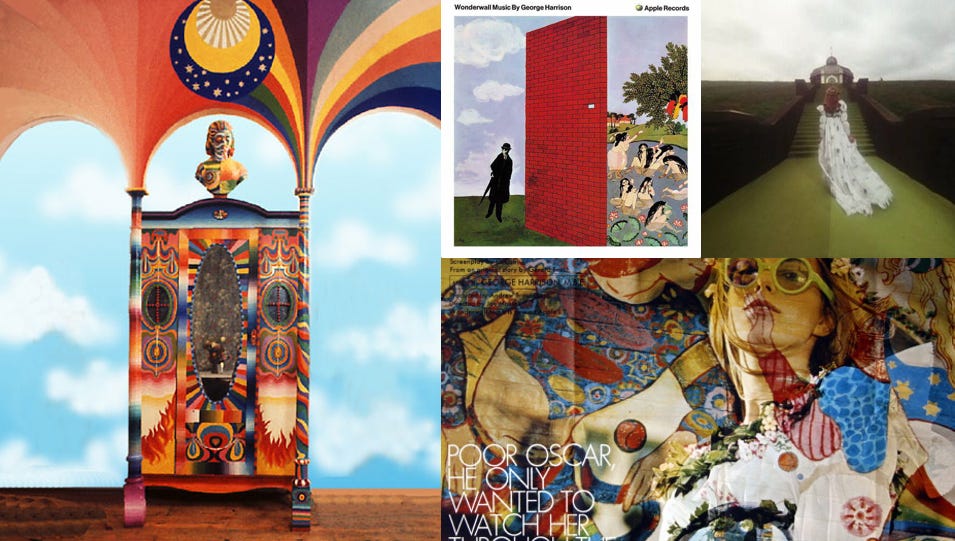
A few of the salient connections include:
The name: the film takes its name from The Fool’s painted armoire, ‘Wonderwall’.
The theme: wall is symbolic of real/fantasy and repressed/liberated 1960s culture.
The characters: Jane Birkin’s protagonist is called (wait for it…) Penny Lane.
The soundtrack: the music is by Harrison and released as Wonderwall Music.
And yes Oasis borrowed the name
Read more:
»»» 04 Wonderwall
»»» 05 One Pill
07: IT’S PART OF THE COUNTER-CULTURE
I’m fascinated by the transatlantic countercultural conversation that weaves together the headshop scene, poster-art, adventures with LSD, Ken Kesey and Magical Mystery Tour.
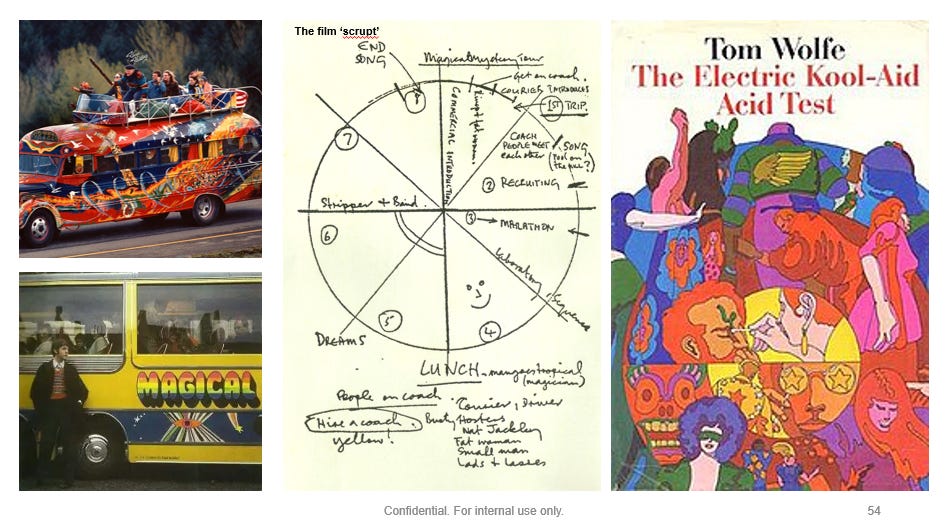
Key beats in this story include:
The emergence of the white rabbit as symbol of LSD & the counterculture
Headshop poster art from East Totem West et al, incl. ‘Turn On Your Mind’
Grace Slick and the Alice smash ‘White Rabbit’ (later in The Matrix)
Ken Kesey’s Merry Pranksters, the bus Furthur, and the infamous acid tests
McCartney’s adds ‘Magical’ onto northern Mystery Tours; a film ‘scrupt’
Read more:
»»» 05 One Pill
»»» 06 Interview Special: Jan McHugh
»»» 13 Swinging Alice
»»» 28 'Scrupted' Mystery Tour
08: IT’S ALL OVER THE FILMS
Magical Mystery Tour is the obvious celluloid manifestation of Carrollian imagery, with a Walrus on view, but there’s more in the movies, not to mention their early music videos.
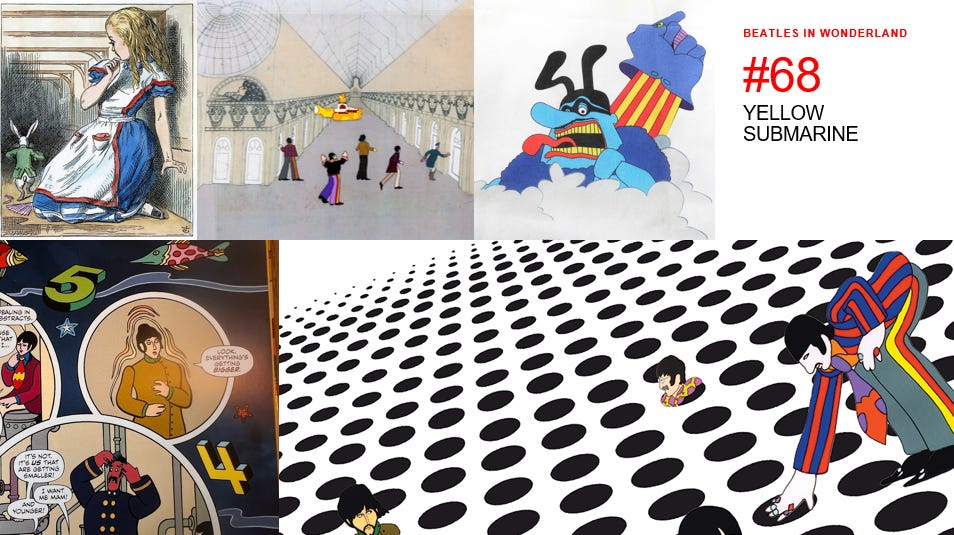
Some of my favourite moments:
Backwards jumping in the time-bending ‘Strawberry Fields’ video
A surreal tea party with champagne in cups in the ‘Penny Lane’ video
The naming of one tearful girl in A Hard Day’s Night, ‘white rabbit’
The discovery that the animal mask order for MMT included a “March Hare”
The blue rabbit with white ears in Yellow Submarine (if you look carefully)
The use of “portal” imagery: sea of holes and door-lined corridor
The playing with time: growing, shrinking, time changing directions
Read more:
»»» 24 Wonderland Submarine
»»» 28 'Scrupted' Mystery Tour
»»» 30 A Hard Day's White Rabbit
09: THE STUDIO WAS WONDERLAND TOO
The least obvious, yet most valuable, influence for me is the way Carrollian creativity - his moves and magic - are echoed in experiments with tech and the development of the studio (Abbey Road / EMI Studios) as a kind of creative wonderland.
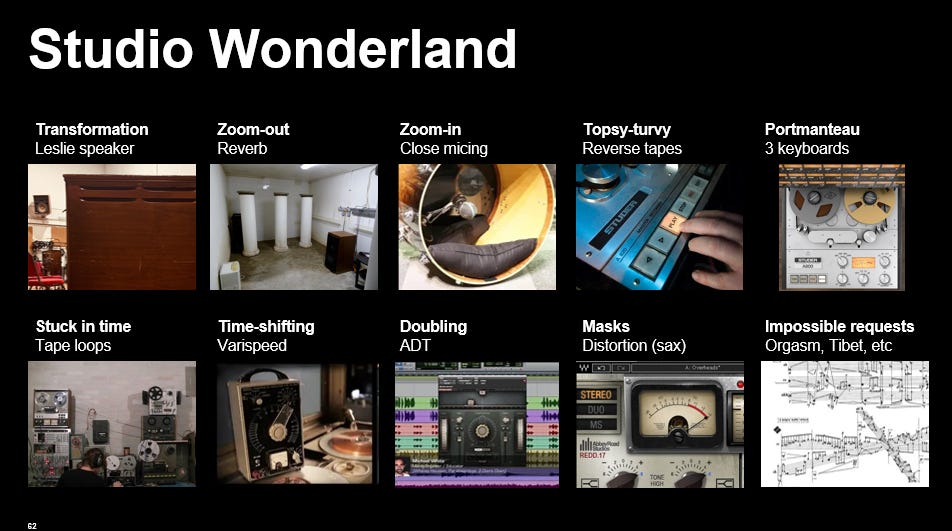
Sonic examples include:
‘Rain’ with its slowed-down rhythm track & backwards vocals
‘Tomorrow Never Knows’ and the infinite loop-scape
‘Penny Lane’s unique-sounding triple-layered keyboards
‘I Am The Walrus’ and the Shepherd Tones orchestral ending
‘Lucy in the Sky’s kaleidoscopic guitars through Leslie speakers
Read more:
»»» 07 Studio Wonderland
»»» 08 Interview Special: Andy Maxwell
»»» 34 Deadwax Nonsense
There’s quite a bit of chat about Carroll and the Beatles, but it tends to revolve around 3 or 4 songs and themes. I hope this expansion of the Carrollian aperture is enlightening.
Next week I think I’ll try writing about Beatles’ kids and their influences.
See you all then!
Posting about the scarab beetle I had painted, I used the spelling with an 'a'. "Don't you see the translucent golden wings humming. They have a beat". I shamelessly told everyone